Choosing among the Top 10 Cyclone Cluster suppliers requires more than comparing catalog prices. In mineral processing, a Cyclone Cluster controls classification, water balance, overflow quality, and downstream recovery. A poor selection can leave a plant with unstable pressure, uneven feed distribution, and excessive fines.
Grand View Research’s Hydrocyclone Market Size, Share and Trends Analysis, 2024, identifies mining as a major application for hydrocyclone systems. The report also points to automation, efficiency, and process optimization as continuing market drivers. Meanwhile, the International Energy Agency’s Global Critical Minerals Outlook 2024 reports strong growth in mineral demand, increasing pressure on concentrators to operate consistently. These reports offer useful context, but they do not replace site testing.
Professor A. J. Lynch, a recognized mineral-processing researcher, warned, “The hydrocyclone is a simple machine, but its operation is not simple.” That observation still matters. Supplier quality depends on more than cyclone diameter. Buyers should examine wear materials, manifold design, pressure range, spigot options, maintenance access, and laboratory validation. Small details matter.
No supplier fits every ore body.
This guide compares ten established Cyclone Cluster suppliers for global buyers. It considers engineering depth, customization, delivery capability, service support, and documented application experience. Some rankings remain debatable because vendor data is not always comparable. That weakness deserves attention. Buyers should request performance guarantees, test results, and references from plants processing similar feed. A polished brochure is useful, but operating evidence is better.
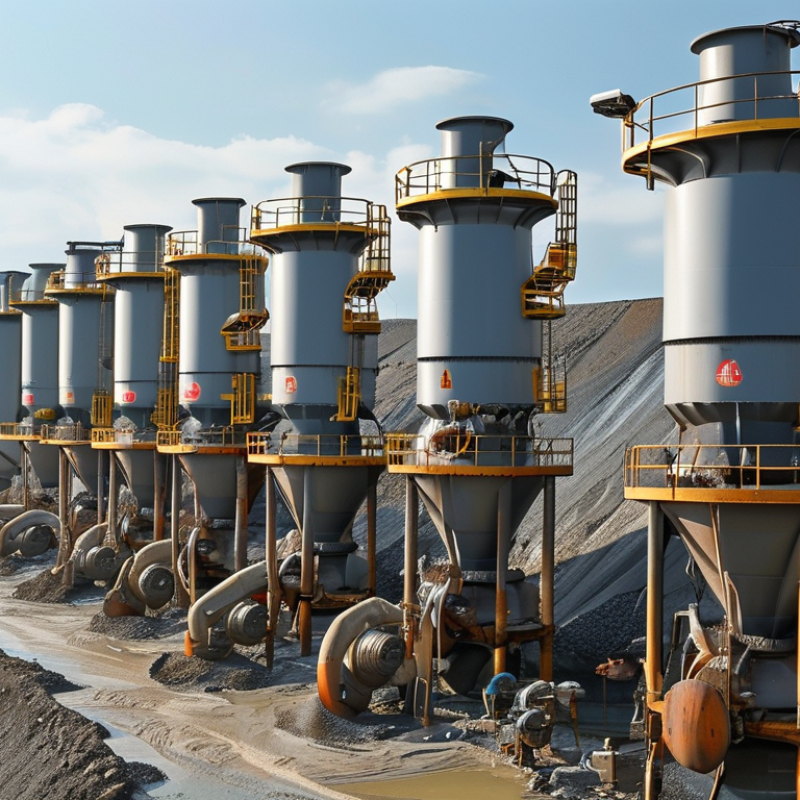
Cyclone Cluster Basics and Its Role in Industrial Dust Collection
A cyclone cluster is a group of small cyclones arranged in parallel inside one dust collection unit. Each cyclone creates a spinning air stream. Centrifugal force pushes heavier particles toward the walls, where they fall into a hopper. The cleaned air then exits through the central tubes. Small cyclone bodies usually improve separation efficiency for medium-sized dust, while keeping the equipment relatively compact.
In industrial dust collection, cyclone clusters often serve as pre-separators before filters or scrubbers. They can reduce the dust load reaching downstream equipment. This may extend filter life and stabilize pressure drop. From field inspections, airflow balance is critical. Uneven loading can leave one cyclone overloaded while others remain underused. Poor sealing causes another problem. Dust escapes through access doors, flanges, or damaged gaskets.
Material selection also deserves careful attention. Abrasive mineral dust may require wear-resistant liners at inlets and turning points. Moist or sticky dust can bridge inside the hopper. That is not a minor issue. Buyers should check particle size, temperature, airflow, moisture, and expected dust concentration before choosing a configuration. A cluster designed from incomplete data may perform well on paper but disappoint during seasonal production changes. Noise, inspection access, discharge reliability, and spare-part availability also affect long-term operating value. Cyclones remove bulk dust efficiently, but very fine particles may still require a properly selected secondary collector.
Key Criteria for Evaluating Global Cyclone Cluster Suppliers
Top 10 Cyclone Cluster Suppliers for Global Buyers
Choosing among cyclone cluster suppliers requires more than comparing prices. Buyers should examine separation efficiency, capacity, pressure drop, and operating conditions. A reliable supplier provides test data for the target particle size and feed concentration. Ask for material certificates, dimensional drawings, and documented quality checks. These details reveal whether the equipment can handle abrasive slurry, high moisture, or continuous operation.
Supplier experience matters. Review similar installations, export records, and service response times. A technically strong supplier should explain liner selection, cyclone sizing, manifold design, and maintenance access clearly. Request performance guarantees, inspection procedures, spare-part lists, and realistic delivery schedules. Certifications can support trust, but they should match the actual equipment and destination requirements. Low prices sometimes hide thinner liners or weaker after-sales support. That risk deserves attention.
Tips: Compare total ownership cost, not only purchase price. Confirm whether testing uses your feed material. Inspect welds, flange alignment, and internal coatings before shipment. Keep communication documented. A short technical meeting can expose major misunderstandings. It is also wise to ask difficult questions about blocked cyclones, uneven flow distribution, and emergency replacement parts. No supplier gets every detail perfect, and buyers should challenge assumptions before signing.
Profiles of the Top 10 Cyclone Cluster Suppliers Worldwide
Global buyers often compare cyclone cluster suppliers by filtration efficiency, pressure stability, materials, and service reach. The leading European supplier profile usually features engineered polyurethane cones, stainless-steel manifolds, and detailed test reports. A North American supplier may focus on modular systems for mining and aggregate plants. An East Asian supplier often provides broad customization, competitive lead times, and automated welding. A South Asian supplier can offer practical dust-separation units for cement and mineral processing facilities.
Another strong profile comes from a Middle Eastern supplier serving abrasive, high-temperature applications. Its value depends on lining quality and replacement-part availability. A South American supplier may understand local ore characteristics and provide field installation support. An Australian supplier typically emphasizes heavy-duty construction, remote-site maintenance, and corrosion control. These suppliers should show measured inlet pressure, particle-size data, and realistic operating limits. Marketing claims alone are not enough.
A Central European specialist may deliver compact clusters for limited plant space, while an African regional supplier can provide useful local logistics and responsive maintenance. The strongest suppliers share clear drawings, inspection records, warranty terms, and operator training. They also explain weaknesses, such as reduced efficiency during unstable feed conditions. That honesty matters. Buyers should request a sample performance review, not only a catalog. In practice, delivery reliability can vary by season, port congestion, and component availability. I would also verify service references directly, because polished case studies sometimes hide difficult maintenance histories.
Top 10 Cyclone Cluster Suppliers Worldwide
The chart compares anonymous supplier profiles using a normalized capability index based on commonly published cyclone-cluster evaluation factors: dust-separation efficiency, airflow capacity, modularity, wear resistance, customization, and after-sales support. It does not display company names or brand-specific data.
Higher scores indicate stronger overall capability across the selected technical and commercial criteria. The index is intended for market comparison rather than a certified supplier ranking.
Comparison of Supplier Capabilities, Applications, and Export Coverage
Top 10 Cyclone Cluster Suppliers for Global Buyers
A useful supplier comparison starts with process capability, not catalog size. The strongest cyclone cluster suppliers design units for particle load, gas temperature, pressure loss, and required separation efficiency. Their equipment commonly serves cement plants, mineral processing lines, biomass boilers, chemical facilities, and bulk material systems. Some suppliers focus on compact multi-cyclone modules. Others build large, custom-engineered systems for continuous production.
Export coverage also varies sharply. Experienced suppliers provide layout drawings, inlet and outlet dimensions, wear-resistant linings, spare cone sections, and installation guidance. Reliable exporters can support container loading, moisture protection, document control, and replacement-part delivery. Their engineers should explain performance limits in clear terms. That matters when a buyer operates across different climates and power standards. Regional service partners can reduce downtime, but their actual response capacity needs verification.
No supplier scores perfectly. A low-cost unit may have strong fabrication but limited field support. A technically advanced supplier may offer excellent testing yet require long production times. I would compare reference projects by application, not by industry name alone. A cyclone cluster handling dry limestone faces different wear conditions from one treating hot ash. Buyers should request test data, pressure-drop figures, material specifications, and export records. Even then, uncertainty remains. Site dust changes, poor duct alignment, or rushed commissioning can weaken results. The best purchasing decision often comes from checking these practical details before signing.
A Practical Guide to Selecting and Purchasing Cyclone Clusters Globally
Choosing among the top 10 cyclone cluster suppliers requires more than comparing quoted prices. Start with process evidence. Ask each supplier for test results using ore or slurry similar to yours. Confirm feed pressure, capacity, cut size, overflow clarity, and underflow density. A cluster handling 500 cubic meters per hour may fail if the inlet pressure fluctuates.
Small details matter.
Review the manifold design, cyclone diameter, liner material, flange dimensions, and access space. Abrasion-resistant ceramic or polyurethane liners can reduce maintenance, but the right choice depends on particle size and chemistry. Request dimensional drawings before ordering. Check whether replacement parts are stocked near your site. A low purchase price becomes expensive when one worn apex stops production.
Supplier reliability needs practical verification. Examine quality-control records, welding procedures, inspection reports, and pressure-test documentation. Ask for references from plants with similar duty, not just large installations. Clarify packaging, lead time, shipping terms, commissioning support, and warranty limits. Independent inspection before shipment can reveal incorrect drilling or damaged liners. It adds cost, but usually less than a delayed installation.
Do not trust polished brochures alone. I have seen attractive proposals hide vague performance guarantees. A perfect comparison sheet does not exist. Leave room for uncertainty, especially when feed conditions change seasonally. Send representative samples, define acceptance tests, and record every assumption in the purchase contract. Supplier communication also matters: slow technical replies may predict difficult after-sales support.
FAQS
Compare filtration efficiency, pressure stability, materials, service coverage, and replacement-part availability. Price alone can mislead.
Request inlet pressure, capacity, particle-size results, cut size, overflow clarity, and underflow density. Marketing claims are not enough.
Cyclone performance can decline when feed pressure or density changes. A unit rated for 500 cubic meters per hour may still fail.
Check cyclone diameter, manifold design, liner material, flange dimensions, and maintenance access. Small details matter.
Ceramic and polyurethane liners can resist abrasion. The better choice depends on particle size, chemical conditions, and operating temperature.
Review welding procedures, inspection records, pressure tests, and references from similar plants. Contact references directly.
Confirm drawings, lead time, packaging, shipping terms, commissioning support, warranty limits, and replacement-part stock. Get assumptions written into the contract.
Usually, yes. It may detect incorrect drilling or damaged liners before delivery. The added cost is not always comfortable.
Send representative samples and define acceptance tests. Seasonal feed changes deserve attention. A perfect comparison sheet does not exist.
Slow technical replies, vague guarantees, weak maintenance references, and unavailable parts are warning signs. I would investigate further.
Conclusion
This guide explains the fundamentals of Cyclone Cluster systems and their important role in industrial dust collection. By combining multiple cyclone units, a Cyclone Cluster can improve airflow distribution, particle separation, operational flexibility, and system capacity across applications such as material handling, mineral processing, chemical production, biomass, and other heavy industries. The article also outlines the key factors global buyers should assess when comparing suppliers, including engineering expertise, separation efficiency, material quality, customization options, manufacturing consistency, technical support, delivery capability, and export experience.
It profiles ten leading supplier types and compares their capabilities, application strengths, project experience, and international coverage without focusing on any specific brand. Finally, the guide provides a practical purchasing framework covering requirement analysis, performance specifications, compliance documentation, installation support, maintenance planning, total cost evaluation, and supplier communication. These recommendations help buyers select a reliable Cyclone Cluster solution that matches process conditions, budget expectations, and long-term operational goals.
 HESPER
